
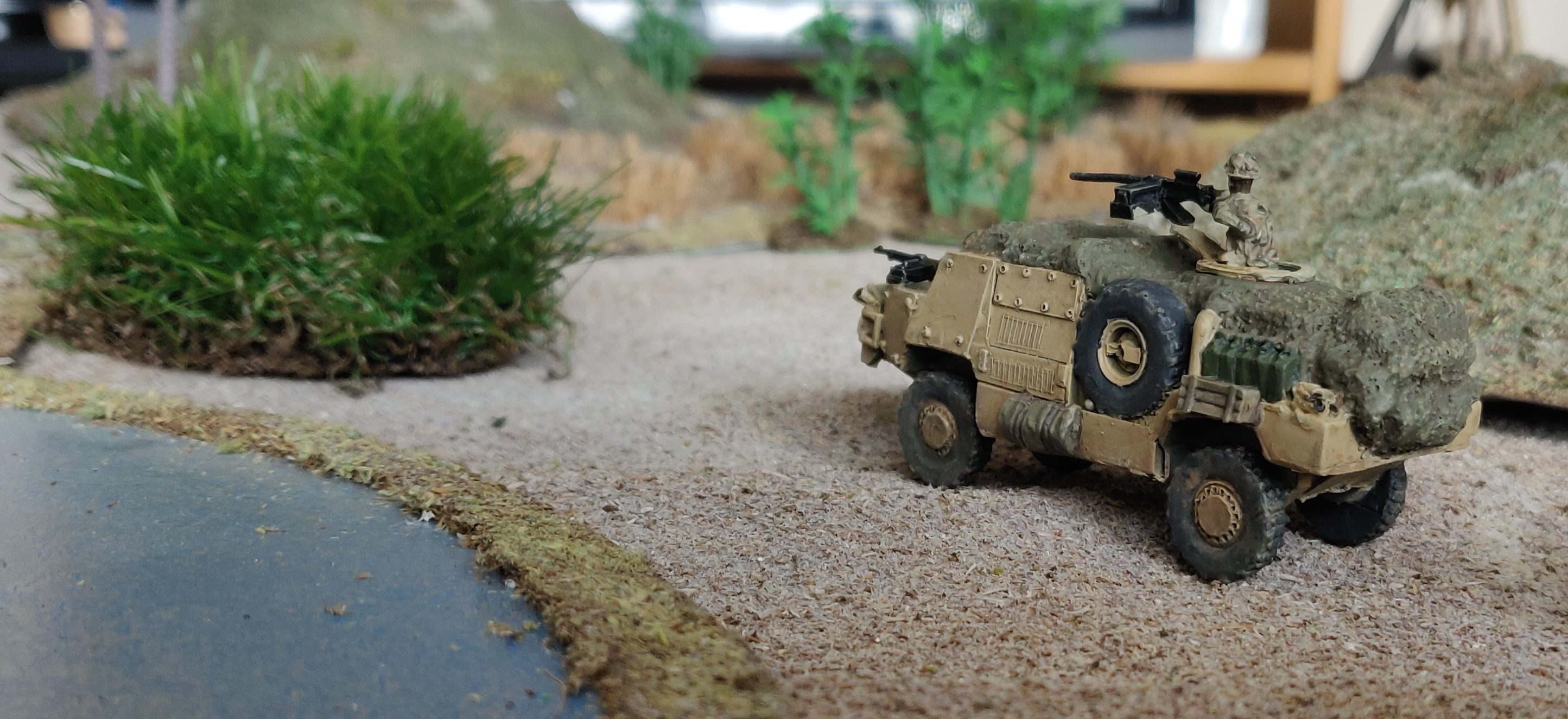
Wargame design is a set of compromises, notably between realism and playing experience. To paraphrase George Box, all wargames we wrong but some are useful/fun. For The Stack we wanted to create something that was easy to pick up but could also provide a richer experience for those that wanted it.
Part of the inspiration for the game came from a discussion on wargaming with a British Major General. He argued that there was insufficient training focus on the cognitive or ‘thinking’ component of warfighting (compared to the physical and moral components) and that this could be better taught to soldiers through wargaming in both formal training settings but also informally at a unit level. To achieve this we mused, a modern skirmish wargame would have to be:
- Quick to pick up and play;
- Reasonably realistic;
- Fun;
Although The Stack is intended for a wide audience, it has been designed with these objectives in mind.
Accessibility
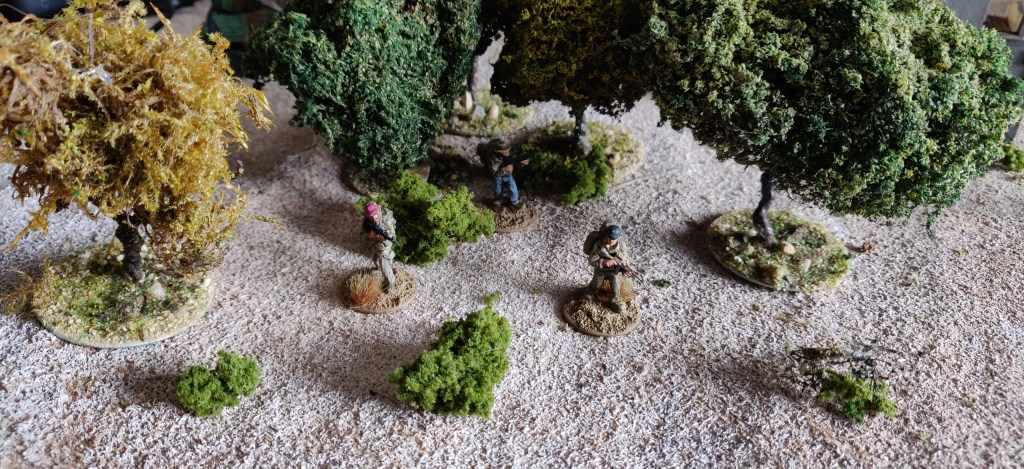
To ensure players could quickly pick the game up, the core rules are written to provide an easy to use framework for the game. The central mechanics are focused on speed, clarity and ease of access. We kept things simple and removed extraneous information to focus on the fundamentals: turn structure, movement, shooting and tasks. We also stripped back the infantry profile to just 5 key stats (Movement, Shooting, Resilience, Fitness and Proficiency), which underpin all activity.
The core rules provide the framework that more advanced rules can be bolted onto. However, the basic stats, along with the principle of drawing a card and checking if it is lower than or equal to the target score are the consistent across the game.
This makes learning the game intuitive and allows players to innovate and adapt the system to meet their needs.
Realism

No wargame is accurate and those that strive for it slavishly can become unplayable or disrupt the player’s immersion and enjoyment. That said, we wanted to create a system that provides a good impression of modern combat and appropriately challenges players with representative decisions and dilemmas.
Very few people want to be checking the rules every 3 minutes or tracking their fighters’ magazine expenditure. It gets in the way of play and slows everything down. By making the system as intuitive as possible, abstracting detail and minimizing administration we have aimed to keep players immersed in the fight. However, if there are areas where play groups want to have more detailed rules, because the system is designed to be flexible, it is easy to incorporate them.
Fun
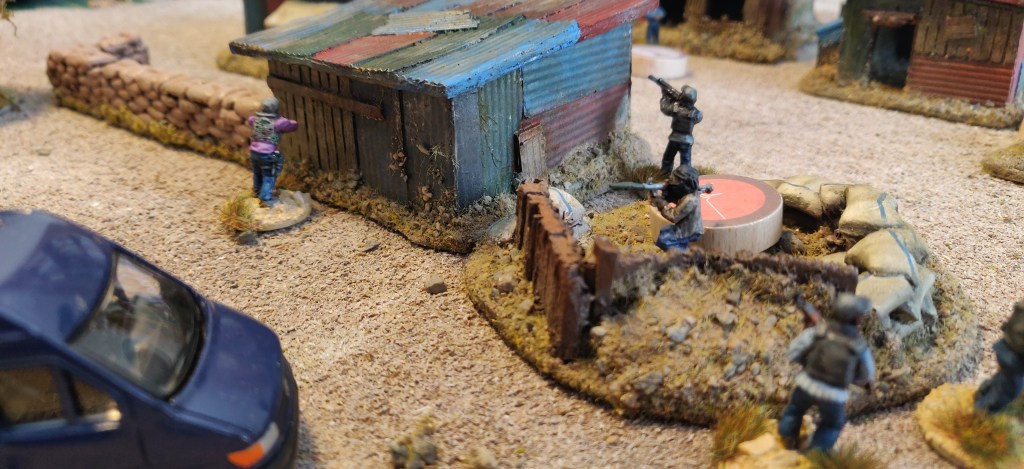
While a few people will play for other reasons, most of us play games for fun. We come back to fun games, we invest more and get more out of the play experience.
But what makes a game fun? For us, a fun play experience has to be meaningful and engaging. To ensure the game is meaningful, player decision had to be primary driver of game outcome. While luck plays an important role, players are constantly presented with decisions about what to do when and how to prioritize. Chance also plays an important role, but the odds can be worked out and the uncertainty keeps both players on their feet, anticipating and responding to their opponent’s likely and actual activity.
To keep players engaged, in addition to the immersion mentioned above, the mechanics are designed to keep both players meaningfully involved. This is mainly achieved through:
- short semi-alternating activation,
- an uncertain turn length,
- a two-sided combat system, and
- an intuitive and consistent ruleset that seeks to minimise referencing the rulebook. (No one wants to break contact with the enemy to read the rules).
The Stack has changed over the course of the playtesting but the core aims have remained constant touch-points when making design decisions
 The Stack