
What is The Stack?
The Stack is a streamlined modern skirmish game, set in the world’s ungoverned spaces and conflict zones. It uses two decks or ‘stacks’ of standard playing cards to run the game and is intended to be played at a squad to platoon level, using individually based 15-28mm figures. The game is setting-agnostic and can be used to play anything from late Cold War to near future.
What you need to play…
- Rules – A copy of the The Stack core rules.
- Figures – The game is designed to be played with 15mm, 20mm, or 28mm scale figures, but you can play at other scales fairly easily. Depending on the scenario or size of battle, you’ll generally need between 4 and 40 figures per side.
- Playing area – there’s no maximum table size, but something between 2’x2′ (for a close in match) and 6’x4′ (for more room to maneuver) will work well.
- Terrain – Some form of terrain to block line of sight and shape your tactical decisions.
- Playing cards – 2 packs of regular playing cards, one pack per player.
- Measuring tape – with inches to measure range and movement.
- Counters – Some counters to record which soldiers have activated and whether any are damaged.
The Origin
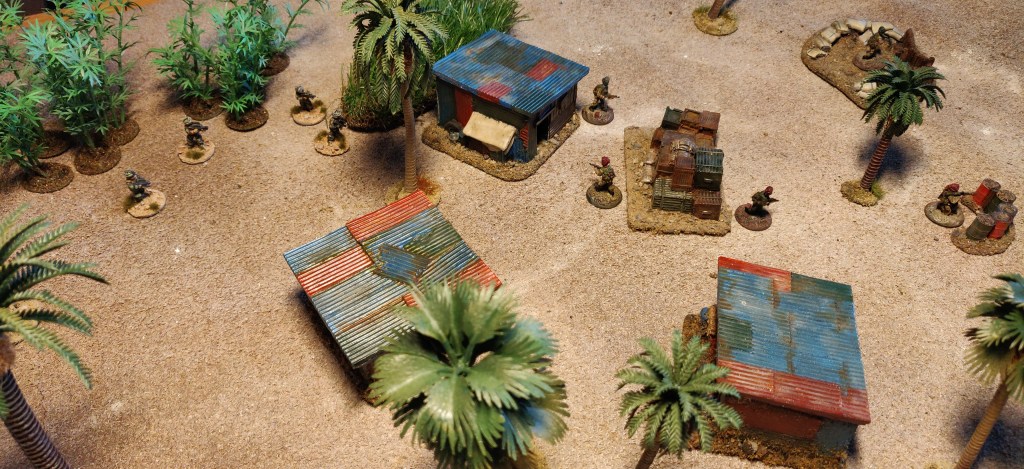
The stack originated during one of the many covid lockdowns. While working on terrain for an in-house 6mm game we realised we had too many palm trees that were the wrong scale. Not wanting to throw them out we started kicking around some skirmish mechanics; we happened to have a deck of cards to hand so as an experiment we ditched the dice and started mucking around with playing card mechanics. Without realising it, the Stack was born.
From the start we wanted the game to be:
- Quick to pick up and play;
- Reasonably realistic; and
- Fun;
Although the game has evolved over time, it has always been designed with these objectives in mind.
The System
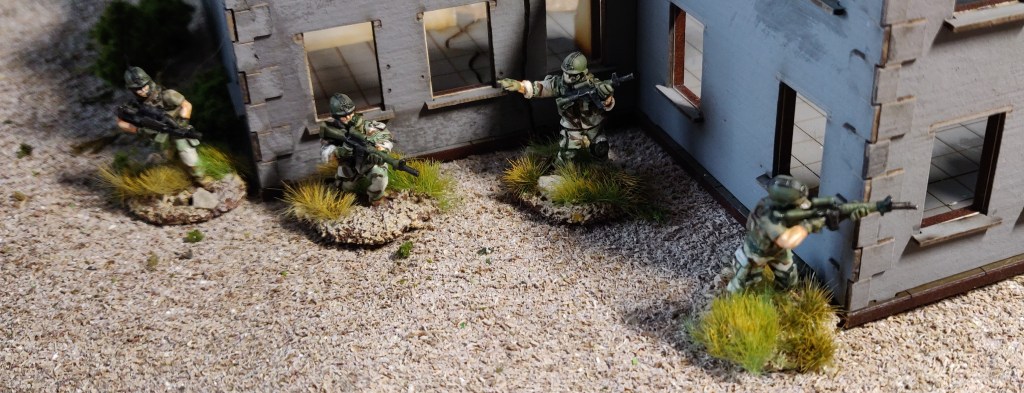
The core of The Stack system is the main rulebook, which fits comfortably into 10 pages, including illustrations and examples. This provides player with all they need to get started.
Rules are streamlined and the mechanics remain consistent throughout the core book and expansions, helping them to quickly become intuitive as players gain experience. The more intuitive we can make the game the less players need to consult the rules and the more immersive the experience.
The rules have also been designed to be progressive. The core rules, primarily covering activation, movement and the combat system allow players to master the fundamental mechanics before taking on greater challenges or customising the ruleset to fit their playing needs.
The Mechanics
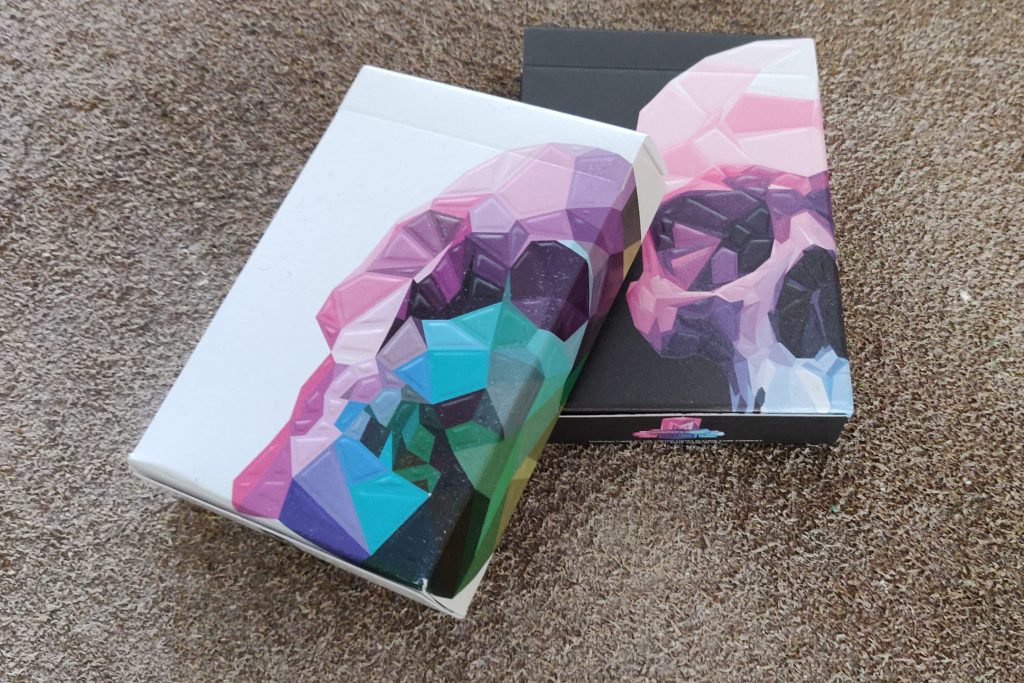
Uncertainty: Instead of dice, the game is played using two decks of normal playing cards referred to as ‘stacks’. The card values go from Ace = 1 to King = 13. Activation and damage value higher cards, but skill checks favor low cards.
Activation: Play tends to alternate quickly between players, which each player activating a handful of troops before checking to see whether they can go again or whether the initiative passes to their opponent. This keeps both players in the game and focussed on the action.
Card Allocation: Each player’s stack contains a limited number of cards, when it is exhausted the round ends. Players must prioritise which troops they want to activate and what they want to do with them, deciding when to conserve and when to spend their cards to best meet their objectives.
Card Area: The numbers on the playing cards are not the only feature that the game makes use of. A card’s area also plays a fundamental role in several areas of the game, most notably in activation and deployment.
Three Tier Damage Model: Damage is reasonably simple, there’s no counting of wounds or keeping track of large number of shock counters. If a soldier takes damage – they either become suppressed, injured or knocked out. Suppressed troops may not activate but can recover, injured troops are in trouble and may require aid, and knocked out troops are removed from play.
 The Stack